


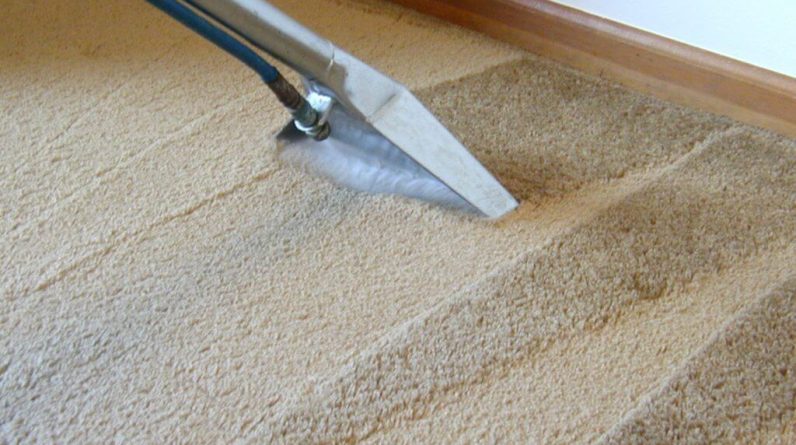
Imagine stepping into your home after a long day, and being greeted by the fresh, clean scent of newly cleaned carpets. Now envision this experience without any harsh chemicals or harmful toxins, and you have the essence of green carpet cleaning.
In this article, we will explore how this innovative approach to carpet cleaning is not only better for the environment but also provides numerous benefits for you and your family. Get ready to discover the world of green carpet cleaning in action and learn how it can transform your living space into a healthier, greener oasis.

What is Green Carpet Cleaning?
Grren carpet cleaning refers to the use of environmentally-friendly practices and products to clean and maintain carpets. It is a conscious effort to reduce the negative impact on the environment while still ensuring clean and healthy living spaces.
By employing sustainable methods and utilizing non-toxic cleaning products, green carpet cleaning promotes the well-being of both the environment and those who inhabit the space.
Definition of green carpet cleaning
Green carpet cleaning encompasses a range of techniques that aim to minimize the use of harmful chemicals and reduce waste in the carpet cleaning process. It involves the adoption of non-toxic cleaning products, water-saving techniques, energy-efficient equipment, and regular maintenance to prevent the need for carpet replacement. This approach prioritizes sustainability and strives to leave a minimal carbon footprint.
Importance of green carpet cleaning
Green carpet cleaning is of utmost importance in today’s environmentally-conscious world. Traditional carpet cleaning methods often involve the use of harsh chemicals and excessive water consumption, which can have detrimental effects on both human health and the planet. By embracing eco-friendly practices, individuals and businesses can contribute to the preservation of natural resources, reduce pollution, and create healthier indoor environments.
Benefits of green carpet cleaning
Adopting green carpet cleaning practices offers numerous benefits. Firstly, it ensures a healthier living or working environment by reducing exposure to harmful chemicals commonly found in traditional cleaning products.
Additionally, eco-friendly methods prolong the lifespan of carpets, minimizing the need for replacement and ultimately saving money. Moreover, it allows individuals and organizations to be responsible custodians of the environment, making a positive impact on natural resources, air quality, and overall sustainability efforts.
Methodologies For Green Carpet Cleaning
Several methodologies and practices contribute to green carpet cleaning. These strategies are designed to prioritize sustainability and minimize environmental impact while still achieving clean and well-maintained carpets.
Use of non-toxic cleaning products
The use of non-toxic cleaning products is a fundamental aspect of green carpet cleaning. These products are designed to be biodegradable, free from harsh chemicals, and safe for both human health and the environment. Non-toxic cleaning solutions effectively remove dirt, stains, and odors while leaving no harmful residues behind.
Adoption of water-saving techniques
Conserving water is crucial in green carpet cleaning. Traditional carpet cleaning methods can use excessive amounts of water, leading to wastage and potential damage to carpets.
By implementing water-saving techniques such as low-moisture carpet cleaning methods and precise extraction techniques, water consumption can be significantly reduced without compromising the cleaning effectiveness.
Utilization of energy-efficient equipment
Green carpet cleaning involves the use of energy-efficient equipment. Energy-efficient machines are designed to minimize power consumption and reduce the carbon footprint associated with carpet cleaning. By utilizing these advanced technologies, cleaning professionals in Lakeland, FL can achieve effective results while conserving energy and reducing environmental impact.
Prevention of carpet waste through maintenance
Regular maintenance practices are crucial for prolonging the lifespan of carpets and reducing carpet waste. By implementing preventative measures such as routine vacuuming, prompt stain removal, and professional deep cleaning, the need for carpet replacement can be minimized.
Regular maintenance not only keeps carpets looking their best but also reduces the environmental impact associated with carpet production and disposal.
Implementation of green cleaning practices
The implementation of green cleaning practices involves adopting a holistic approach to green carpet cleaning. This includes using environmentally-friendly cleaning methods, incorporating sustainable cleaning techniques, and promoting a culture of sustainability within the cleaning industry. By following green cleaning practices, professionals can ensure that their cleaning procedures align with the principles of sustainability and minimize negative environmental impacts.
Non-Toxic Cleaning Products
Non-toxic cleaning products play a vital role in green carpet cleaning. These products offer numerous advantages over traditional cleaning solutions.
Advantages of non-toxic cleaning products
Non-toxic cleaning products provide a safe and healthy alternative to traditional cleaning solutions that often contain harsh chemicals. By using non-toxic products, individuals and cleaning professionals can minimize the risk of respiratory issues, skin irritations, and other health problems associated with exposure to toxic cleaning chemicals.
Furthermore, non-toxic products are typically biodegradable, reducing their impact on the environment.
Examples of green carpet cleaning solutions
There are a variety of green carpet cleaning solutions available in the market. These include plant-based cleaners, enzyme-based cleaners, and products certified by eco-labels such as Green Seal or Environmental Choice.
Plant-based cleaners harness the cleaning power of natural ingredients such as citrus, vinegar, and baking soda. Enzyme-based cleaners use enzymes to break down stains and odors without the need for harsh chemicals.
Comparison with traditional cleaning products
Non-toxic cleaning products offer several advantages over traditional cleaning products. Traditional cleaning solutions often contain harmful chemicals such as chlorine, ammonia, and artificial fragrances, which can have adverse effects on human health and the environment.
In contrast, non-toxic products provide a safe, gentle, and effective cleaning solution that reduces the risk of exposure to harmful substances without compromising cleanliness.
Water-Saving Techniques
Conserving water is a key aspect of green carpet cleaning. Implementing water-saving techniques is crucial to minimize water consumption during the cleaning process.
Importance of conserving water in carpet cleaning
Conserving water in carpet cleaning is important for several reasons. Firstly, excessive water usage contributes to water scarcity, especially in regions facing water stress or droughts. By minimizing water consumption, individuals and cleaning professionals can contribute to the conservation of this precious resource.
Additionally, excessive moisture during the cleaning process can lead to carpet shrinkage, mold growth, and other damage. Proper water conservation techniques help maintain the integrity and longevity of carpets.
Methods to minimize water consumption
There are several effective methods to minimize water consumption in eco-friendly carpet cleaning. Low-moisture encapsulation cleaning methods, for example, use polymer crystals to encapsulate and crystallize dirt, allowing for easy removal without the need for excessive water usage.
Additionally, employing precise extraction techniques and utilizing equipment with adjustable water flow settings can optimize water usage and reduce wastage.
Efficient extraction and drying techniques
Efficient extraction and drying techniques are essential to minimize water usage in carpet cleaning. Proper extraction removes dirt, stains, and moisture from carpets, allowing them to dry quickly.
By using equipment with powerful extraction capabilities, cleaning professionals in Lakeland, Florida can efficiently remove excess moisture, reducing the drying time required. This not only conserves water but also prevents mold growth and damage to carpets caused by prolonged dampness.

Energy-Efficient Equipment
Using energy-efficient equipment is a crucial aspect of environmentally-friendly cleaning. Employing energy-efficient machines helps reduce energy consumption and minimize the carbon footprint associated with carpet cleaning.
Energy-saving benefits of eco-friendly equipment
Energy-efficient carpet cleaning equipment offers numerous benefits. Firstly, it reduces energy consumption, leading to cost savings and a smaller environmental impact.
Energy-saving features such as automatic shut-off, variable speed control, and LED lights help optimize energy usage and promote sustainability. Moreover, advanced technologies in energy-efficient equipment often result in enhanced cleaning performance, ensuring effective results while minimizing energy waste.
Examples of sustainable carpet cleaning machines
Various sustainable carpet cleaning machines are available in the market, each designed to provide efficient and eco-friendly cleaning solutions. For instance, low-energy consumption carpet extractors utilize advanced vacuum and pump systems, allowing for powerful cleaning performance while minimizing energy usage.
Similarly, battery-powered carpet sweepers and electric brooms offer effective cleaning without the need for electricity, further reducing energy waste.
Reducing carbon footprint through equipment choices
Making informed equipment choices can significantly reduce the carbon footprint associated with carpet cleaning. Opting for energy-efficient machines and using equipment with eco-friendly features not only lowers energy usage but also contributes to carbon emissions reduction.
Cleaning professionals and organizations in Lakeland, FL can evaluate the energy consumption and carbon footprint of different equipment options and select those that align with their sustainability goals.
Prevention of Carpet Waste
Preventing carpet waste is a crucial aspect of green carpet cleaning. Regular maintenance practices contribute to prolonging the lifespan of carpets and reducing the need for replacement.
Importance of regular maintenance for prolonging carpet lifespan
Regular maintenance is vital to prolong the lifespan of carpets. By implementing preventative measures such as routine vacuuming, prompt stain removal, and periodic deep cleaning, carpets can remain in optimal condition for a longer time.
Proper maintenance also prevents the accumulation of dirt, allergens, and bacteria, enhancing indoor air quality and promoting a healthy living or working environment.
Tips for preventing stains and damage
Several tips and practices can help prevent stains and damage, preserving the quality and longevity of carpets. Spills should be addressed promptly, using appropriate spot removal techniques and non-toxic carpet cleaning solutions.
It is essential to avoid rubbing or scrubbing the stained area vigorously, as this can damage the carpet fibers. Regular vacuuming, placing mats in high-traffic areas, and removing shoes before entering carpeted spaces also contribute to stain prevention and carpet preservation.
Minimizing the need for replacement
By practicing regular maintenance, carpets can be kept in excellent condition, minimizing the need for replacement. This not only saves money but also reduces the environmental impact associated with carpet production and disposal. Furthermore, sustaining the lifespan of carpets reduces the amount of waste sent to landfills, contributing to a more sustainable future.
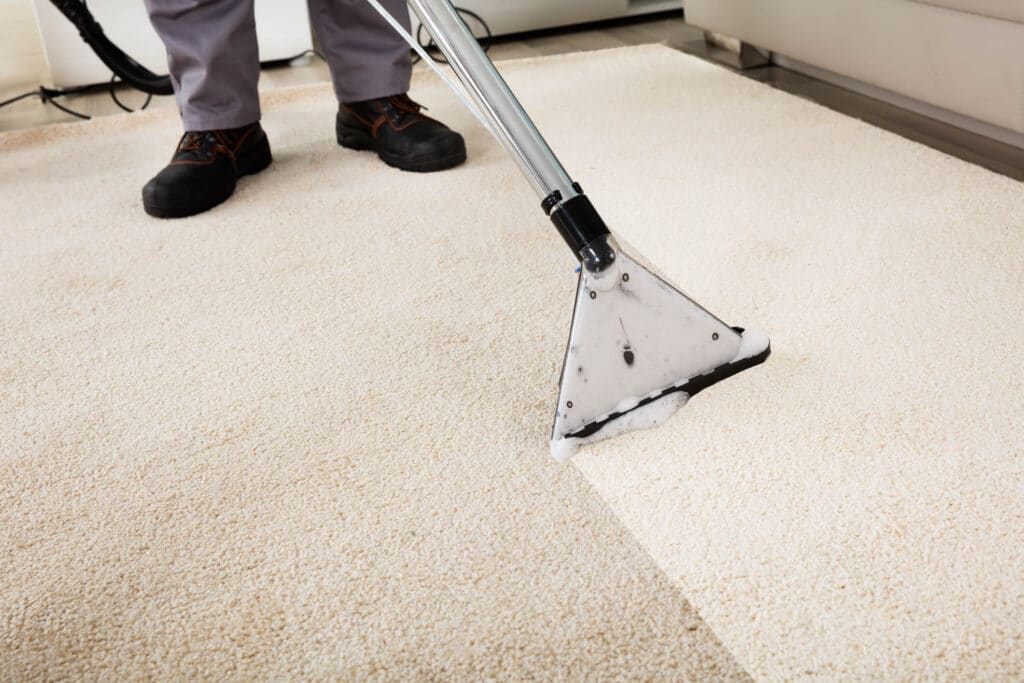
Image courtesy of fatherandsoncarpetcleaning.net.
Green Cleaning Practices
Implementing green cleaning practices is essential to achieve comprehensive environmentally-friendly carpet cleaning. This holistic approach involves creating and implementing a green cleaning plan, providing training and education on eco-friendly practices, and adhering to certifications and standards for environmentally-friendly cleaning.
Creating and implementing a green cleaning plan
Developing and implementing a green cleaning plan allows individuals and organizations to systemize their environmentally-friendly carpet cleaning practices. This plan should outline sustainable cleaning procedures, specify the use of non-toxic products, detail water-saving techniques, and underscore energy-efficient equipment usage.
By formalizing green cleaning processes, it becomes easier to ensure consistent adherence and achieve the desired environmental results.
Training and education for eco-friendly practices
Providing comprehensive training and education on eco-friendly practices is crucial for successful implementation. Cleaning professionals in Lakeland, Florida should be equipped with the knowledge and skills required to effectively utilize non-toxic cleaning products, employ water-saving techniques, and operate energy-efficient equipment.
Ongoing education and training programs help to promote a culture of sustainability and ensure that all individuals involved understand and embrace the principles of green carpet cleaning.
Certifications and standards for environmentally-friendly cleaning
Certifications and standards play a vital role in validating environmentally-friendly cleaning practices. Various organizations offer certifications to recognize and promote sustainable cleaning practices, ensuring compliance with rigorous environmental criteria.
These certifications, such as LEED (Leadership in Energy and Environmental Design) and Green Business Certification, provide credibility and assurance to clients and stakeholders regarding an organization’s commitment to green carpet cleaning.
Case Study: Eco-Friendly Carpet Cleaning in Action
A case study showcasing green carpet cleaning in action can provide valuable insights into the effectiveness and benefits of these practices.
Overview of the case study
This case study focuses on a commercial cleaning company that adopted green carpet cleaning practices as part of its sustainability initiatives. The company committed to using non-toxic cleaning products, implementing water-saving techniques, and investing in energy-efficient equipment. The case study explores the company’s transition, challenges faced, and the positive impact on the environment and customer satisfaction.
Environmental impact assessment
The case study assesses the environmental impact of the company’s green carpet cleaning practices. It examines factors such as water consumption reduction, energy savings, and the reduction of harmful chemicals released into the environment. By quantifying these metrics, it becomes possible to understand the tangible benefits of eco-friendly practices and establish a benchmark for future improvements.
Efficiency and effectiveness of eco-friendly methods
The case study evaluates the efficiency and effectiveness of green carpet cleaning methods. It compares the cleaning results achieved using non-toxic products, water-saving techniques, and energy-efficient equipment to those obtained with traditional cleaning methods. By assessing factors such as cleaning time, stain removal, and customer feedback, the case study showcases how eco-friendly methods can deliver results that are on par or superior to conventional approaches.
Customer satisfaction and feedback
Customer satisfaction and feedback are crucial indicators of the success of green carpet cleaning practices. The case study gathers feedback from clients who have experienced the company’s eco-friendly cleaning services.
Testimonials and surveys are used to gauge satisfaction levels and understand the perceived value of environmentally-friendly practices. This feedback reinforces the notion that green carpet cleaning can provide customers with cleaner and healthier spaces while contributing to their sustainability goals.

Challenges and Limitations
While green carpet cleaning offers various advantages, there are potential challenges and limitations to consider.
Potential difficulties in adopting eco-friendly methods
Transitioning to green carpet cleaning methods may present certain challenges. Cleaning professionals in Lakeland, FL may need additional training to understand the proper usage of non-toxic products and energy-efficient equipment.
Adjusting to new cleaning procedures and techniques may also require time and adaptation. Additionally, there may be resistance from clients who are unfamiliar with, or skeptical of, the effectiveness of eco-friendly practices, necessitating education and clear communication.
Limitations of existing eco-friendly cleaning solutions
Existing eco-friendly cleaning solutions may have limitations in terms of cleaning power and effectiveness on certain types of stains or carpets. While non-toxic products and water-saving techniques have advanced significantly, there may still be instances where traditional cleaning methods are required for optimal results. Continuous research and development are necessary to improve eco-friendly cleaning solutions and address any limitations that arise.
Cost implications and financial considerations
Adopting green carpet cleaning practices may entail additional costs initially. Non-toxic cleaning products and energy-efficient equipment can sometimes have a higher upfront investment compared to their conventional counterparts.
However, it is important to consider the long-term cost savings and environmental benefits associated with eco-friendly practices. Over time, the cost savings achieved through reduced water usage, minimized energy consumption, and prolonged carpet lifespan can outweigh the initial investment.
Future Prospects and Trends
The future of green carpet cleaning looks promising, with advancements in technology and emerging trends shaping the industry.
Advancements in technology for greener carpet cleaning
Advancements in technology are driving the development of more efficient and greener carpet cleaning solutions. For example, the introduction of nanotechnology has led to the creation of microscopic cleaning agents that penetrate carpet fibers more effectively, reducing the need for excessive water usage. Additionally, the integration of artificial intelligence into cleaning equipment allows for precise and optimized cleaning, further minimizing resource consumption.
Emerging trends in the industry
The carpet cleaning industry is witnessing several emerging trends that align with eco-friendly practices. One such trend is the rise of sustainable and recyclable carpet materials, which are easier to maintain and less prone to staining.
Another trend is the focus on circular economy principles, with the introduction of carpet recycling programs and eco-friendly disposal methods. Additionally, digital platforms that connect customers with eco-friendly cleaning professionals are gaining popularity, making it easier for individuals and businesses to access environmentally-conscious cleaning services.
Collaboration between manufacturers and cleaning professionals
Collaboration between manufacturers of cleaning equipment and cleaning professionals is crucial for fostering innovation and advancing eco-friendly practices. Manufacturers can develop equipment that caters specifically to the needs of environmentally-conscious cleaning professionals, while cleaning professionals can provide real-world feedback and insights to drive product improvements. This collaboration ensures that the industry continues to progress towards more sustainable and effective carpet cleaning practices.
FAQs – Green Carpet Cleaning
1. What is green carpet cleaning?
- Green carpet cleaning refers to the use of environmentally-friendly practices and products to clean and maintain carpets, aiming to reduce the negative impact on the environment while ensuring clean and healthy living spaces.
2. What does green carpet cleaning encompass?
- Green carpet cleaning involves sustainable methods, non-toxic cleaning products, water-saving techniques, energy-efficient equipment, and regular maintenance to minimize the environmental footprint and promote sustainability.
3. Why is green carpet cleaning important?
- Green carpet cleaning is vital because it helps preserve natural resources, reduces pollution, and creates healthier indoor environments by minimizing exposure to harmful chemicals and excessive water consumption.
4. What are the benefits of green carpet cleaning?
- Green carpet cleaning offers benefits such as a healthier living environment, extended carpet lifespan, cost savings, and a positive impact on natural resources and air quality.
5. What are some methodologies for green carpet cleaning?
- Green carpet cleaning methodologies include the use of non-toxic cleaning products, water-saving techniques, energy-efficient equipment, prevention of carpet waste through maintenance, and implementation of green cleaning practices.
6. How do non-toxic cleaning products contribute to green carpet cleaning?
- Non-toxic cleaning products are safe for both the environment and human health, effectively removing dirt and stains without leaving harmful residues behind.
7. Why is conserving water important in green carpet cleaning?
- Water conservation is crucial as it helps reduce water scarcity, prevents carpet damage, and minimizes environmental impact. It can be achieved through low-moisture cleaning and precise extraction techniques.
8. What are examples of energy-efficient equipment in green carpet cleaning?
- Energy-efficient equipment includes low-energy carpet extractors, battery-powered carpet sweepers, and electric brooms. These machines optimize energy usage and reduce the carbon footprint.
9. How does regular maintenance prevent carpet waste?
- Regular maintenance practices like vacuuming, prompt stain removal, and professional deep cleaning help prolong carpet lifespan, reduce the need for replacement, and minimize environmental impact.
10. What are green cleaning practices in the context of green carpet cleaning? – Green cleaning practices involve using sustainable cleaning methods, eco-friendly products, and promoting a culture of sustainability within the cleaning industry.
11. How can organizations create and implement a green cleaning plan? – Organizations can create a green cleaning plan by outlining sustainable procedures, specifying non-toxic products, detailing water-saving techniques, and emphasizing energy-efficient equipment usage.
12. What are the future prospects and trends in green carpet cleaning? – The future of green carpet cleaning includes advancements in technology for more efficient cleaning, emerging trends such as sustainable carpet materials and circular economy principles, and collaboration between manufacturers and cleaning professionals to drive innovation in eco-friendly practices.

Summary
In conclusion, green carpet cleaning is a holistic approach that seeks to reduce environmental impact while still achieving clean and healthy living spaces. By employing non-toxic cleaning products, water-saving techniques, energy-efficient equipment, regular maintenance, and green cleaning practices, individuals and cleaning professionals can promote sustainability and contribute to a healthier planet. Advancements in technology, emerging trends, and collaboration in the industry are driving the future prospects of green carpet cleaning. By embracing these practices and continually improving upon them, we can create a cleaner, healthier, and more sustainable future.